
Best Refinance Lenders in California – Lower Your Rates and Save Big
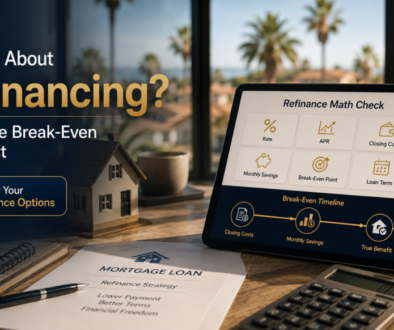
Refinancing can be a smart move for California homeowners, but only when the numbers make sense. A lower rate sounds attractive, yet the best refinance lender is not always the one with the lowest advertised rate. The right lender should help you compare rate, APR, closing costs, loan term, cash-out options, monthly savings, and your break-even point.
As of April 30, 2026, Freddie Mac reported the average U.S. 30-year fixed mortgage rate at 6.30% and the 15-year fixed rate at 5.64%, with weekly movement from 6.23% to 6.30% on the 30-year fixed rate between April 23 and April 30. That movement shows why refinance quotes should be reviewed carefully and updated when you are ready to act.
At The Lending Mamba, we help California homeowners compare refinance options clearly so they can decide whether refinancing supports their financial goals.
What Makes a Refinance Lender “Best”?
The best refinance lender should explain the full cost and long-term impact of the new loan. That means looking beyond the monthly payment and reviewing whether the refinance improves your financial position.
A strong refinance lender should help you compare:
Interest rate
APR
Closing costs
Discount points
Monthly savings
New loan term
Break-even point
Cash-out amount, if any
Mortgage insurance impact
Rate lock terms
The Consumer Financial Protection Bureau recommends comparing Loan Estimates from multiple lenders to help determine which loan and lender is right for you. This is especially important when refinancing because a lower rate with high costs may not actually save money if you sell, move, or refinance again before reaching the break-even point.
When Does Refinancing Make Sense?
Refinancing may make sense when it helps you lower your monthly payment, reduce your interest rate, shorten your loan term, switch from an adjustable-rate mortgage to a fixed-rate mortgage, remove mortgage insurance if eligible, or access home equity through a cash-out refinance.
However, refinancing is not automatically the right choice. You need to compare the savings against the cost.
For example, if refinancing saves you $250 per month but costs $6,000 in closing costs, your break-even point would be about 24 months. If you plan to keep the loan longer than that, it may make sense. If you plan to sell soon, it may not.
Refinance Rates Are Not the Same for Everyone
Your refinance rate depends on your credit score, loan amount, home equity, debt-to-income ratio, property type, occupancy, loan term, lender pricing, points, and market conditions.
A homeowner with strong credit and significant equity may receive different pricing than a homeowner with less equity, higher debts, or a cash-out refinance request.
That is why it is important to get a personalized refinance review rather than relying only on online averages.
Rate-and-Term Refinance
A rate-and-term refinance replaces your current mortgage with a new mortgage, usually to improve the interest rate, monthly payment, or loan term.
This option may be useful if rates are lower than your current loan, if you want to switch from a 30-year to a 15-year loan, or if you want to move from an adjustable-rate mortgage into a fixed-rate mortgage.
The main question is whether the savings justify the closing costs.
Cash-Out Refinance
A cash-out refinance allows homeowners to replace their current mortgage with a larger new loan and receive part of the difference in cash. This may be used for home improvements, debt consolidation, investments, or major expenses.
Cash-out refinancing can be useful, but it increases your mortgage balance and may affect your rate, payment, and long-term interest cost. It should be reviewed carefully.
In some cases, a HELOC or home equity loan may be a better fit than replacing the first mortgage. The right option depends on your current rate, equity, repayment goals, and cash needs.
15-Year vs. 30-Year Refinance
A 15-year refinance may offer a lower rate than a 30-year loan, but the monthly payment is usually higher because the loan is paid off faster. As of April 30, 2026, Freddie Mac reported the U.S. average 15-year fixed mortgage rate at 5.64%, compared with 6.30% for the 30-year fixed mortgage.
A 15-year refinance may work for homeowners who want to build equity faster and pay less interest over time. A 30-year refinance may be better for homeowners focused on monthly payment flexibility.
Why The Lending Mamba Is a Strong Refinance Partner
At The Lending Mamba, we work with a variety of lenders to help California homeowners compare refinance options, rates, terms, and costs. We take time to understand your goals before recommending a path.
Whether you want to lower your rate, reduce your monthly payment, shorten your loan term, access equity, or compare refinance vs. HELOC options, our team helps you understand the full picture.
Our approach is transparent, honest, and focused on helping you make an informed decision.
Final Thoughts
The best refinance lender in California is not simply the one advertising the lowest rate. It is the lender or mortgage broker that helps you compare total cost, monthly savings, closing costs, APR, break-even point, and long-term impact.
Before refinancing, review your numbers carefully.
Contact The Lending Mamba today.
www.thelendingmamba.com
657-777-0024
Disclaimer: Refinance rates, APR, closing costs, loan programs, eligibility, and terms can change. This article is for educational purposes only and is not a rate quote, approval guarantee, or commitment to lend. Speak with a licensed mortgage professional for guidance based on your specific situation.