
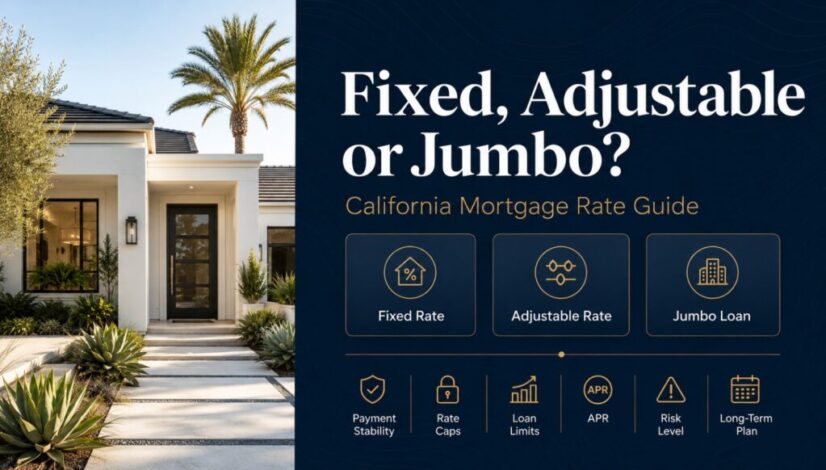
How to Choose Between Fixed, Adjustable, and Jumbo Mortgage Rates in California
Choosing the right mortgage rate structure in California can feel confusing. Buyers often hear terms like fixed-rate mortgage, adjustable-rate mortgage, ARM, jumbo loan, APR, and rate lock, but they may not know which option actually fits their goals.
The best mortgage choice is not always the lowest starting rate. It depends on how long you plan to keep the home, your comfort with payment changes, your loan amount, your income stability, and whether the property requires jumbo financing.
At The Lending Mamba, we help California buyers compare mortgage structures clearly so they can choose with confidence.
Why Mortgage Type Matters
Your mortgage type affects more than the interest rate. It can affect your monthly payment, payment stability, approval requirements, down payment strategy, closing costs, future refinance options, and long-term interest cost.
A fixed-rate loan may feel safer for a long-term buyer. An adjustable-rate mortgage may appeal to someone who expects to move or refinance before the adjustment period, but it carries future payment risk. A jumbo loan may be required when the loan amount exceeds conforming loan limits.
Understanding these differences helps buyers choose based on strategy, not guesswork.
What Is a Fixed-Rate Mortgage?
A fixed-rate mortgage has an interest rate that stays the same for the life of the loan. That means the principal and interest portion of the payment does not change.
The Consumer Financial Protection Bureau explains that with a fixed-rate mortgage, your interest rate and monthly principal and interest payment stay the same. The CFPB contrasts this with adjustable-rate mortgages, where the interest rate may go up or down.
A fixed-rate mortgage may be a good fit if you want payment stability, plan to stay in the home for a long time, prefer predictable budgeting, or do not want to take interest-rate adjustment risk.
Benefits of a Fixed-Rate Mortgage
Fixed-rate mortgages are popular because they are simple and predictable.
Key benefits include:
- Stable principal and interest payment
- Easier long-term budgeting
- Protection if rates rise later
- Strong fit for long-term homeowners
- Less complexity than an ARM
For many California buyers, especially those buying a primary residence for long-term use, a fixed-rate mortgage may provide peace of mind.
ARM Risks Buyers Must Understand
An ARM may offer a lower starting rate, but future payments can increase. The CFPB warns that buyers should not assume they will be able to sell or refinance before the rate changes, because property values or personal financial conditions may change.
The CFPB also explains that ARM payments depend on the introductory period, rate caps, and the index interest rate, and that both the rate and monthly payment can increase substantially.
This is why buyers should compare the starting payment and the possible future payment.
What Are Index, Margin, and Caps?
ARM loans usually adjust based on an index plus a margin. The CFPB explains that the index is an interest rate that changes with general market conditions, and changes in the index plus the margin determine the ARM interest rate and payment changes.
Important ARM terms include:
- Initial fixed period
- Adjustment frequency
- Index
- Margin
- Initial adjustment cap
- Periodic adjustment cap
- Lifetime cap
- Payment cap, if applicable
Before choosing an ARM, buyers should understand the worst-case payment scenario.
When an ARM May Make Sense
An ARM may make sense for certain borrowers, such as buyers who plan to sell before the adjustment period, borrowers expecting income growth, buyers who want a lower initial payment, or buyers with a clear refinance strategy.
However, an ARM should not be chosen only because the starting payment looks better. It should fit the buyer’s risk tolerance and long-term plan.
What Is a Jumbo Mortgage?
A jumbo mortgage is a loan that exceeds conforming loan limits. In California, jumbo loans can become relevant because many counties and neighborhoods have high home prices.
If your loan amount exceeds the applicable conforming limit for the county and property type, you may need jumbo financing.
Jumbo Loan Requirements Can Be Different
Jumbo loans may have stricter requirements because the loan amount is larger. Lenders may review credit score, down payment, reserves, income documentation, debt-to-income ratio, property type, and appraisal details more carefully.
A jumbo loan may also have different pricing than conforming loans. Sometimes jumbo rates are higher; sometimes they can be competitive depending on lender appetite and borrower profile. Luxury buyers should compare more than the interest rate. Review APR, points, reserve requirements, rate lock, and lender conditions.
Fixed vs. ARM vs. Jumbo: How to Compare
A fixed-rate mortgage is mainly about payment stability. An ARM is mainly about lower starting cost with future adjustment risk. A jumbo loan is mainly about loan amount and eligibility when the mortgage exceeds conforming limits.
These categories can overlap. For example, a jumbo loan can be fixed-rate or adjustable-rate. A conforming loan can also be fixed or adjustable. That means buyers should compare both loan size and rate structure.
APR Matters in Every Option
The interest rate is important, but APR gives a broader view of loan cost. The CFPB explains that an annual percentage rate reflects the mortgage interest rate plus other charges, including points, fees, and other costs.
When comparing fixed, adjustable, and jumbo options, buyers should review both rate and APR, along with closing costs and monthly payment.
Common Mistakes to Avoid
- Avoid choosing an ARM only because the starting payment is lower.
- Avoid assuming you can refinance later before an ARM adjusts.
- Avoid choosing a jumbo loan without checking whether a high-balance conforming option is available.
- Avoid comparing rate without APR, points, and closing costs.
- Avoid ignoring how long you plan to keep the home.
Which Mortgage Type Is Best?
There is no single best option for everyone. A fixed-rate loan may be best for buyers who want long-term stability.
An ARM may be useful for buyers with a shorter expected ownership period and strong comfort with future rate risk.
A jumbo mortgage may be necessary for luxury or high-cost purchases, but buyers should compare jumbo vs. high-balance conforming options when possible. The best mortgage is the one that fits your loan amount, timeline, risk comfort, and financial goals.
How The Lending Mamba Helps
At The Lending Mamba, we help California buyers compare fixed-rate, adjustable-rate, and jumbo mortgage options clearly. We work with a variety of lenders, which allows us to review different rate structures, loan limits, terms, and program options.
Our goal is to help you understand the full mortgage picture before making a decision.
Whether you are a first-time buyer, move-up buyer, luxury buyer, or refinancing homeowner, we are here to guide you with transparency and honesty.
Final Thoughts
Choosing between fixed, adjustable, and jumbo mortgage rates in California is about strategy. Fixed loans offer stability, ARMs offer potential short-term flexibility with future risk, and jumbo loans help finance higher-priced properties when loan amounts exceed conforming limits.
Before choosing, compare rate, APR, fees, payment risk, loan limits, and your long-term plan.
Contact The Lending Mamba today.
www.thelendingmamba.com
657-777-0024
Disclaimer: Mortgage rates, APR, loan limits, eligibility, points, fees, ARM adjustment terms, and jumbo requirements can change. This article is for educational purposes only and is not a rate quote, approval guarantee, financial advice, or commitment to lend. Speak with a licensed mortgage professional for guidance based on your specific situation.