New Construction Loans in California: One-Time Close, Two-Close and Draw-Schedule Guide for 2026
Financing a custom home is not the same as purchasing an existing property. With a normal purchase mortgage, the home already exists and the lender can evaluate its current condition and value. With new construction, money may need to fund land, plans, permits, labor and materials before a completed home is available as collateral.
That is why construction financing uses budgets, builder review, draw schedules, inspections and conversion rules that do not apply in the same way to a typical resale purchase.
California projects add another layer: land cost, local permitting, insurance availability, environmental or site work, utility connections and construction timelines can materially affect the budget. A strong plan must work on paper before the foundation is poured.
First clarify what “new construction” means
Several transactions are often described with the same phrase:
- Buying a completed new home from a builder – usually financed as a standard purchase mortgage.
- Buying a home while a production builder completes it – may involve a longer rate-lock and builder-controlled timeline.
- Building a custom home on land you own or are purchasing – commonly needs construction or construction-to-permanent financing.
- Major renovation or teardown/rebuild – may require a renovation or construction program depending on the scope.
This guide focuses on the third category: financing the construction of a custom home.
How a construction loan works
Construction funds are typically not released to the builder in one lump sum. Instead, the lender manages disbursements through a series of draws tied to verified progress.
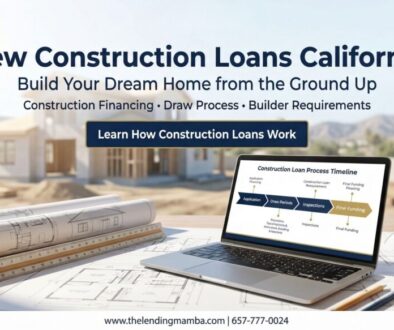
A simplified process may include:
- Borrower and project qualification
- Land, title and lien review
- Builder approval
- Plans, specifications and budget review
- Appraisal based on the proposed completed home
- Loan closing
- Construction draws and inspections
- Completion documentation
- Conversion to or replacement by permanent financing
Actual steps vary by lender, program, property and local requirements.
One-time-close construction-to-permanent financing
With a one-time or single-close transaction, the construction financing and permanent mortgage are arranged in one closing. Fannie Mae’s guide explains that a single-closing transaction can cover both phases, with the construction loan converting automatically to permanent financing after completion under the loan documents.
Potential advantages
- One primary closing rather than two
- Permanent-financing terms established early, subject to the program
- Less need to requalify for a completely separate mortgage at completion
- One coordinated construction-to-permanent structure
Points to verify
- Rate-lock or conversion terms
- What happens if completion is delayed
- Construction-period payment calculation
- Contingency reserve
- Change-order process
- Builder and contractor requirements
- Conditions for final conversion
- Whether the project and property type are eligible
A single closing does not eliminate construction risk. It changes how the financing phases are connected.
Two-close construction-to-permanent financing
A two-close structure uses an interim construction loan followed by a separate permanent mortgage after the home is complete. Fannie Mae’s guide recognizes both one-closing and two-closing construction-to-permanent structures.
Potential advantages
- Ability to compare permanent financing closer to completion
- Interim loan can be designed for the construction phase
- May fit projects or lenders that do not offer a single-close option
Points to verify
- A second qualification and closing may be required
- Additional closing costs may apply
- Permanent rates may be unknown during construction
- Changes in credit, income, employment or property value may affect the later loan
- The project must meet final completion and occupancy requirements
The borrower should understand who carries the risk if permanent financing is unavailable or more expensive when construction ends.
One-time close versus two-close comparison
| Question | One-time close | Two-close |
| Number of closings | One connected transaction | Construction closing plus permanent closing |
| Permanent terms | Established under the initial structure | Arranged closer to completion |
| Requalification | Program-specific; conversion conditions still apply | Typically requires separate permanent-loan approval |
| Closing costs | May reduce duplicate closing expenses | May involve costs for both transactions |
| Rate exposure | Depends on lock and conversion terms | Permanent rate can change before second closing |
| Flexibility | More integrated | May allow broader permanent-loan shopping later |
Neither structure is automatically better. The project timeline, borrower profile, rate strategy and tolerance for a second approval determine the fit.
Builder approval is part of the loan
Construction underwriting evaluates more than the borrower. The mortgage lender may review the builder or general contractor’s:
- License and insurance
- Experience with similar projects
- Financial strength
- References and project history
- Contract and payment terms
- Detailed construction budget
- Draw schedule
- Timeline
- Required warranties
- Relationship to the borrower
An owner-builder project can face different or more restrictive rules. Do not assume a lender will approve the builder simply because the borrower has signed a contract.
Plans, specifications and appraisal
The lender and appraiser need enough detail to understand the home that will exist at completion. The file may include:
- Architectural plans
- Engineering documents
- Site plan and survey
- Building specifications
- Permits or permit status
- Line-item budget
- Construction contract
- Material and finish schedule
- Utility and access information
- Land documentation
- Estimated completion date
The appraisal may use the proposed plans and comparable completed homes to estimate an “as-completed” value. If the appraised value is lower than expected, the maximum financing or required cash contribution may change.
Understanding the draw schedule
The lender typically releases funds as construction reaches defined stages. A simplified schedule might include:
- Site preparation and foundation
- Framing
- Roof, windows and exterior enclosure
- Plumbing, electrical and mechanical rough-ins
- Drywall and interior work
- Cabinets, flooring and finishes
- Final completion and certificate documentation
An inspection may verify completed work before each draw. The mortgage lender can also require lien waivers, invoices or title updates.
Questions to ask about draws
- Who requests each draw?
- How long does review and funding usually take?
- Is interest charged only on funds already advanced?
- Who pays inspection fees?
- Are deposits for materials permitted?
- How are retainage and final payment handled?
- What documentation is required from subcontractors?
- How are cost overruns funded?
The builder’s payment expectations must align with the lender’s disbursement process.
Budget, contingency and cost overruns
The budget should include more than visible construction. California projects may require:
- Architecture and engineering
- Permits and impact fees
- Site preparation and grading
- Soil, drainage or foundation work
- Utility connections or septic systems
- Fire-access or wildfire-related improvements
- Insurance
- Interest and carrying costs
- Temporary housing
- Landscaping and exterior completion
- Change orders
- Contingency reserve
If costs rise, the lender may not automatically increase the loan. Determine in advance how overruns must be paid and how much liquidity should remain outside the project.
Land equity and lot financing
If the borrower already owns the lot, eligible land equity may be considered within the financing structure under lender rules. If the land is being purchased as part of the project, the transaction may include the lot acquisition.
The lender will review:
- Title and existing land liens
- Purchase history
- Current value
- Zoning and legal access
- Utilities
- Buildability and permits
- Environmental or site concerns
- Whether the borrower and project meet program requirements
Owning land free and clear does not guarantee that it can be built on or financed.
Construction-period payments
Depending on the program, payments during construction may be based on funds disbursed, a scheduled calculation or another structure. Borrowers should ask:
- When interest starts
- Whether payments change after each draw
- Whether any interest reserve is used
- Whether taxes and insurance are escrowed
- What payment applies after conversion
- What happens during an extension
Model both the construction-period cash flow and the permanent monthly payment.
Insurance and closing risk
Insurance requirements can change during the project. The lender may require builder’s risk or course-of-construction coverage and later evidence of standard homeowners coverage. California wildfire exposure, property location, materials and carrier availability can influence cost or timing.
Obtain appropriate insurance guidance early. A last-minute coverage problem can delay a draw, conversion or final closing.
Common construction-loan mistakes
- Signing a builder contract before confirming financing compatibility
- Using a rough allowance instead of a complete line-item budget
- Assuming the appraised value will equal cost
- Underestimating permits, site work or utility expenses
- Spending all liquidity on land or the initial contribution
- Making undocumented change orders
- Choosing a contractor the lender will not approve
- Ignoring the rate or requalification risk of a two-close structure
- Failing to coordinate draw timing with the builder
- Planning without a realistic contingency reserve
- Treating the proposed completion date as guaranteed
A pre-closing checklist
- Confirm whether the transaction is a completed-home purchase or true custom build.
- Compare one-time and two-close structures.
- Review land ownership, title and buildability.
- Obtain complete plans and specifications.
- Select a builder who can satisfy lender review.
- Create a line-item budget and contingency.
- Understand the draw and inspection process.
- Verify construction and permanent payment terms.
- Review insurance before closing.
- Keep reserves for delays and overruns.
The Lending Mamba 1-0 Buydown option for eligible completed-home purchases
Buyers purchasing a completed new home with an eligible agency or government purchase loan may ask whether the separate 1-0 Buydown offer fits their transaction.
The Lending Mamba is covering the cost of your 1-0 Buydown.
This offer should not be assumed to apply to the construction phase or every construction-to-permanent program.
Available on agency or government loans only. Additional terms and qualification requirements may apply.
How The Lending Mamba helps
The Lending Mamba helps California borrowers determine whether the transaction is best treated as a builder-home purchase, custom construction loan, construction-to-permanent structure or renovation project. The review can include land, builder, budget, draws, permanent financing, closing costs and reserves.
Call 657-777-0024 or 844-24-MAMBA, or visit www.thelendingmamba.com to discuss a California construction-financing plan.
Frequently asked questions
Q1. Can I use a normal purchase mortgage to build a home?
A. A standard purchase mortgage generally funds a completed property. Custom construction usually requires a construction or construction-to-permanent structure.
Q2. Is a one-time close always cheaper?
A. It may reduce duplicate closing costs, but pricing, lock terms, fees and program requirements must be compared.
Q3. Can I act as my own builder?
A. Owner-builder eligibility is lender- and program-specific and may be restricted.
Q4. Does the lender give all construction funds to the contractor at closing?
Construction funds are commonly disbursed through draws tied to progress and inspections.
Q5. What if the project goes over budget?
A. The borrower may need to fund overruns or change orders according to the loan agreement. Plan a realistic contingency.
Q6. Can land equity count toward the transaction?
A. Eligible land value or equity may be considered under program rules, subject to title, valuation and documentation.
Final takeaway
A successful construction loan connects five pieces: an eligible borrower, buildable land, an approved builder, a complete budget and a permanent financing plan. Before choosing one-time or two-close financing, understand who controls the draws, how overruns are handled, what happens if the project is delayed and how the loan becomes a long-term mortgage.