Buying New Construction Mortgage in California? Compare the Mortgage Before You Sign
Buying a new construction Mortgage can feel exciting. Everything is fresh. The floor plan is modern. The finishes are new. The community may have amenities, model homes, upgrade packages, and builder incentives. But before you sign a new construction contract, there is one important question to ask: Have you compared the mortgage?
Many buyers focus on the home design, builder upgrades, and monthly payment estimate. But the mortgage structure can affect your total cost, closing timeline, cash to close, rate lock, payment stability, and long-term affordability. At The Lending Mamba, we help California buyers compare new construction mortgage options before they commit.
Why New Construction Is Different
Buying a resale home and buying new construction are not the same. With a resale home, the property is usually complete and the closing timeline is often more predictable. With new construction, buyers may need to consider:
- Builder incentives
- Preferred lender offers
- Upgrade credits
- Deposit requirements
- Completion timeline
- Rate lock period
- Appraisal timing
- Construction delays
- Final walkthrough
- Closing Disclosure timing
- Loan re-verification before closing
- Property taxes and insurance estimates
- HOA dues
- Mello-Roos or special assessments, if applicable
Builder Lender vs. Independent Mortgage Review
Many builders have a preferred lender. A builder may offer incentives if the buyer uses that preferred lender. These incentives may include closing cost credits, rate buydown options, upgrade credits, or other purchase-related benefits. That can be helpful, but buyers should not assume the builder lender offer is automatically the best overall mortgage. The smart move is to compare. Ask:
Q. What is the interest rate?
Q. What is the APR?
Q. Are points included?
Q. What are the lender fees?
Q. What are the closing costs?
Q. Is the incentive tied to a specific lender?
Q. Does the incentive increase the purchase price or loan cost?
Q. How long is the rate lock?
Q. What happens if construction is delayed?
Q. What is the payment after any temporary buydown ends?
Compare the Loan Estimate
A Loan Estimate helps buyers compare loan terms, closing costs, cash to close, APR, and monthly payment. When buying new construction, buyers should request and compare written loan details instead of relying only on verbal estimates or sales office numbers. Compare:
- Interest rate
- APR
- Loan type
- Points
- Lender credits
- Builder credits
- Origination charges
- Title and escrow fees
- Prepaid taxes and insurance
- HOA dues
- Estimated property taxes
- Mortgage insurance
- Cash to close
- Monthly payment
Rate Lock Risk in New Construction
Rate locks are very important in new construction. If the home will not be completed for several months, the buyer should understand how the rate lock works. Ask:
Q. Is the rate locked now or later?
Q. How long is the lock period?
Q. Is there an extended rate lock option?
Q. What does the lock cost?
Q. Can the rate float down if rates improve?
Q. What happens if construction is delayed?
Q. Who pays for lock extension fees?
Q. Does the loan need to be re-approved before closing?
Builder Incentives: Helpful or Expensive?
Builder incentives can be attractive. A buyer may see:
- Closing cost credit
- Rate buydown
- Upgrade allowance
- Appliance package
- Design center credit
- HOA credit
- Temporary payment reduction
- Preferred lender discount
These offers may help buyers reduce upfront costs or improve payment comfort. But buyers should compare the full structure. A large incentive may be tied to using a specific lender. A low advertised payment may depend on points, credits, temporary buydown terms, or assumptions that may not match the buyer’s final approval. Before accepting an incentive, ask:
Q. What am I receiving?
Q. What must I do to receive it?
Q. Is it tied to the builder’s lender?
Q. Can another lender match or beat the full offer?
Q. Does the incentive affect the price?
Q. Does it reduce cash to close or monthly payment?
Q. Is the benefit temporary or long-term?
The Lending Mamba 1-0 Buydown Option
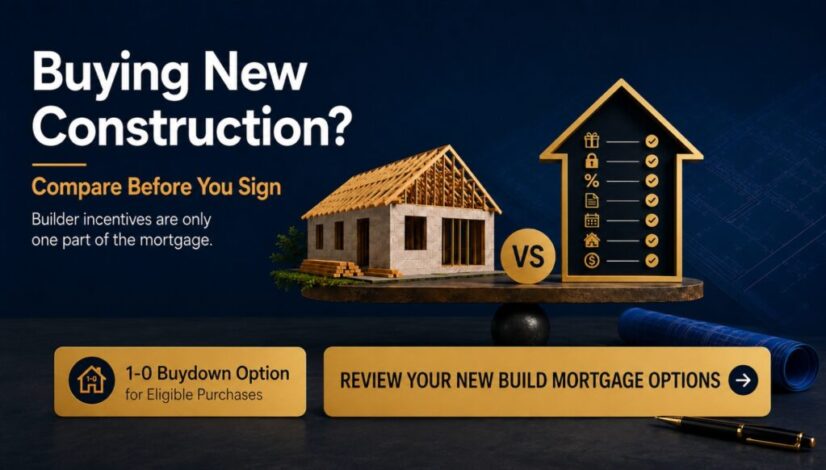
The Lending Mamba is covering the cost of your 1-0 Buydown for eligible purchase transactions. For new construction buyers, this may be worth reviewing if the purchase transaction qualifies. A 1-0 Buydown may help lower the payment during the first year, giving eligible buyers more breathing room as they settle into the new home. However, buyers should still understand:
- Standard payment after year one
- Loan type
- APR
- Closing costs
- Builder incentives
- Cash to close
- Rate lock terms
- Long-term affordability
New Construction Purchase vs. Construction Loan
There are two common new construction financing situations.
Buying From a Builder
If you are buying a home from a builder in a new community, the builder may already be handling construction. The buyer may close with a regular mortgage when the home is complete or near completion. This is common in master-planned communities, tract homes, and builder developments. In this case, the buyer should focus on:
- Builder contract
- Deposit
- Preferred lender offer
- Rate lock
- Completion timeline
- Appraisal
- Final walkthrough
- Closing Disclosure
- Cash to close
- Loan approval updates
Building a Custom Home
If you are building a custom home or financing construction yourself, you may need a construction loan or construction-to-permanent loan. This type of financing may involve:
- Construction budget
- Builder approval
- Plans and permits
- Draw schedule
- Inspections
- Interest during construction
- Land ownership
- Conversion to permanent financing
- Higher documentation needs
- Timeline and cost overrun risk
Appraisal and Completion Timeline
New construction appraisals may be based on plans, specifications, comparable sales, and the final property condition. The lender may need documentation such as:
- Builder contract
- Plans and specs
- Upgrade list
- Community information
- Final inspection
- Certificate of occupancy, if required
- Appraisal updates
- Completion certificate
If the home is delayed, the loan timeline may also be affected. Buyers should ask how delays could impact rate lock, appraisal, approval documents, and closing date.
Property Taxes, HOA, and New Home Costs
New construction buyers should not focus only on principal and interest. The full payment may include:
- Principal and interest
- Property taxes
- Homeowners insurance
- Mortgage insurance, if applicable
- HOA dues
- Special assessments
- Mello-Roos, if applicable
- Utilities
- Maintenance and setup costs
New homes may have HOA dues, community fees, or special tax assessments that buyers should understand before signing. A beautiful new home can still become uncomfortable if the full payment is not reviewed.
Upgrade Costs and Loan Amount
Design center upgrades can add up quickly. Buyers may choose upgraded flooring, countertops, cabinets, lighting, appliances, landscaping, smart-home features, and structural options. Some upgrades may be paid upfront. Others may be included in the purchase price or loan amount, depending on the builder and loan structure. Before choosing upgrades, ask:
Q. Will this increase my loan amount?
Q. Will this increase property taxes?
Q. Will this affect appraisal?
Q. Will I need more cash upfront?
Q. Does the upgrade improve long-term value?
Q. Can I afford the higher payment?
Common New Construction Buyer Mistakes
Mistake 1: Choosing the builder lender without comparison.
The incentive may be helpful, but compare the full mortgage.
Mistake 2: Ignoring APR and closing costs.
A low rate or credit does not show the full cost.
Mistake 3: Not understanding the rate lock.
Construction delays can affect the final mortgage.
Mistake 4: Forgetting taxes, HOA, and special assessments.
The full monthly payment matters.
Mistake 5: Over-upgrading at the design center.
Upgrades can affect cash, loan amount, and payment.
Mistake 6: Assuming the first estimate is final.
Loan terms, taxes, insurance, and closing costs may change before closing.
Mistake 7: Not asking about payment after a buydown.
If using a temporary buydown, understand the standard payment after the buydown period.
Questions to Ask Before Signing a New Construction Contract
Before signing, ask:
Q. Can I compare the builder lender with another mortgage option?
Q. What incentives are available?
Q. Are incentives tied to the preferred lender?
Q. What is the interest rate and APR?
Q. Are points included?
Q. What are total closing costs?
Q. What is total cash to close?
Q. How long is the rate lock?
Q. What happens if construction is delayed?
Q. Are property taxes estimated accurately?
Q. Are HOA dues included in the payment estimate?
Q. Are there special assessments?
Q. Can a 1-0 Buydown apply to my transaction?
Q. What is the payment after year one?
Q. What happens if the appraisal comes in lower?
Q. What documents must be updated before closing?
How The Lending Mamba Helps New Construction Buyers
The Lending Mamba helps California buyers compare new construction mortgage options clearly. We review:
- Builder lender offers
- Independent mortgage options
- Builder incentives
- Rate lock strategy
- Loan Estimate comparison
- APR and closing costs
- FHA and conventional options
- Jumbo options, if needed
- 1-0 Buydown strategy
- Cash to close
- Appraisal timing
- Closing Disclosure timing
- Long-term affordability
Final Thoughts
New construction can be exciting, but the mortgage should be reviewed with care. Builder incentives, rate locks, completion timelines, taxes, HOA dues, upgrades, closing costs, and long-term payment all matter. Before you sign a new construction contract, compare the mortgage.
The Lending Mamba
Call: 657-777-0024
Visit: www.thelendingmamba.com
Disclaimer: Eligibility, rates, terms, builder incentives, loan options, rate locks, appraisal timing, construction timelines, closing costs, tax estimates, HOA dues, and program availability may vary. This content is for educational purposes only and is not a commitment to lend, guarantee of approval, guarantee of savings, or guarantee of builder incentive availability. Speak with a licensed mortgage professional to review your specific situation.