
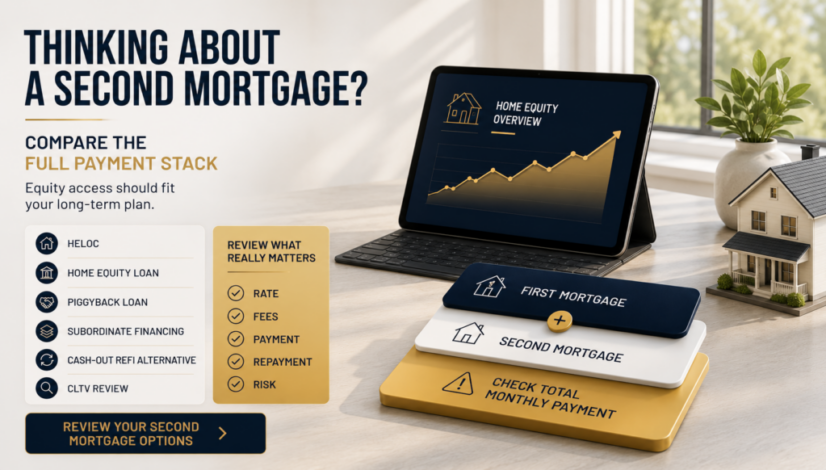
Second Mortgage Strategy: When a HELOC, Home Equity Loan, or Subordinate Loan May Fit
A second mortgage can be a useful financing tool, but it should never be treated casually. Whether you are a homeowner trying to access equity, a buyer considering subordinate financing, or an investor reviewing capital options, the key question is not simply:
“Can I borrow more?”
The better question is:
“Does a second mortgage strategy fit my full financial plan?”
At The Lending Mamba, we help California buyers and homeowners compare second mortgage options with clarity before they add another loan secured by the property.
What Is a Second Mortgage?
A second mortgage is an additional loan secured by a property that already has another mortgage. The first mortgage usually has first priority. The second mortgage is generally subordinate, meaning it sits behind the first mortgage in lien position. Second mortgages may include:
- Home equity loans
- HELOCs
- Piggyback loans
- Subordinate financing
- Down payment assistance loans
- Community Seconds
- Certain seller or third-party subordinate liens
- Investment property second liens
Why Homeowners Use a Second Mortgage
Homeowners may review second mortgage options when they want to access equity without replacing their current first mortgage. This can be especially relevant if the homeowner has a favorable first mortgage rate and does not want to refinance the entire loan. Common reasons homeowners review second mortgage options include:
- Home renovations
- Debt consolidation
- Emergency liquidity
- Education expenses
- Business planning
- Investment capital
- Large one-time expenses
- Keeping the current first mortgage in place
- Avoiding a full cash-out refinance
- Creating flexible access through a HELOC
Home Equity Loan as a Second Mortgage
A home equity loan is usually a lump-sum loan. The homeowner borrows a specific amount against the property’s equity and repays it over time. A home equity loan may fit when the homeowner wants:
- One defined loan amount
- Predictable payments
- A fixed repayment plan
- Funding for a planned expense
- Less temptation to keep drawing funds
- Budget stability
HELOC as a Second Mortgage
A HELOC is a home equity line of credit. Instead of receiving one lump sum, the homeowner receives access to a credit line and can draw funds as needed during the draw period, up to the approved limit. A HELOC may fit when the homeowner wants:
- Flexible access to funds
- Draw-as-needed structure
- Ongoing project funding
- Phased renovation financing
- Emergency liquidity
- A credit line for uncertain expenses
But HELOCs may carry variable-rate risk. Payments can change as rates change or when the draw period ends and repayment begins. Before choosing a HELOC, homeowners should understand the draw period, repayment period, rate type, rate caps, fees, and future payment risk.
Second Mortgage vs. Cash-Out Refinance
A second mortgage is not the same as a cash-out refinance. With a second mortgage, the original first mortgage usually stays in place, and a new loan is added behind it. With a cash-out refinance, the current mortgage is replaced with a new, larger mortgage, and the homeowner receives cash from the equity. A second mortgage may be worth reviewing if:
- You want to keep your current first mortgage
- You need a smaller amount of equity access
- You want a separate repayment structure
- You want flexible access through a HELOC
- Your current rate is better than new available first mortgage rates
A cash-out refinance may be worth reviewing if:
- You want one new mortgage
- You need a larger equity-access strategy
- You want to restructure the full loan
- You want to change the term or loan type
- You want to consolidate mortgage debt into one payment
Second Mortgage for Homebuyers
Second mortgages are not only for existing homeowners. Some buyers may use subordinate financing as part of a purchase strategy. Examples may include:
- Down payment assistance
- Community Seconds
- Affordable housing program loans
- Piggyback mortgage structures
- Seller financing, where allowed
- Secondary financing paired with a first mortgage
This can help some buyers reduce upfront cash needs or structure the purchase differently, but the rules can be detailed. The second mortgage must generally be disclosed, documented, and approved as part of the full loan structure.
Piggyback Loan Strategy
A piggyback loan is a purchase structure where a buyer uses a first mortgage and a second mortgage together. Some buyers review piggyback structures to:
- Reduce cash down
- Avoid or reduce mortgage insurance
- Keep the first mortgage within a certain loan limit
- Create a separate second loan repayment structure
- Compare alternatives to jumbo financing
A piggyback strategy may be useful in some cases, but buyers should compare the full cost. That includes:
- First mortgage payment
- Second mortgage payment
- Rate and APR on both loans
- Fees
- Combined loan-to-value
- Mortgage insurance comparison
- Prepayment terms
- Long-term affordability
Down Payment Assistance as Subordinate Financing
Some homebuyer assistance programs are structured as subordinate financing. This means the buyer may have a first mortgage and a second mortgage connected to the assistance program. The second mortgage may be deferred, silent, low-interest, forgivable, or repayable later, depending on the program. Buyers should ask:
Q. Is the assistance a loan or grant?
Q. Is it a second mortgage?
Q. Are monthly payments required?
Q. When must it be repaid?
Q. What happens if I sell or refinance?
Q. Is there interest?
Q. Are there income limits?
Q. Does the property qualify?
Q. Can it be combined with my first mortgage?
Combined Loan-to-Value: Why CLTV Matters
When a second mortgage is added, lenders often review combined loan-to-value, or CLTV. CLTV compares the total of all loans secured by the property to the property’s value. For example, if you have a first mortgage and add a second mortgage, both loans are considered when reviewing the property’s total leverage. CLTV can affect:
- Eligibility
- Pricing
- Maximum loan amount
- Available credit line
- Mortgage insurance
- Risk review
- Approval strength
The Payment Stack
A second mortgage creates a payment stack. That means the borrower may have:
- First mortgage payment
- Second mortgage payment
- Property taxes
- Homeowners insurance
- Mortgage insurance, if applicable
- HOA dues
- Other debts
- Future payment changes
The second payment may look manageable by itself, but the total monthly obligation matters. Borrowers should review the complete payment, not just the new loan payment.
Variable-Rate Risk
Some second mortgage products, especially HELOCs, may have variable rates. A variable rate can change over time. That may cause the payment to increase. Before choosing a variable-rate second mortgage, ask:
Q. What index is the rate tied to?
Q. How often can the rate adjust?
Q. Is there a rate cap?
Q. What is the starting payment?
Q. What could the payment become later?
Q. Is there a fixed-rate option?
Q. What happens after the draw period?
Q. Can I afford the repayment period payment?
Debt Consolidation With a Second Mortgage
Some homeowners review second mortgages to consolidate higher-interest debt. This can lower monthly obligations in some cases, but it can also create risk.
When unsecured debt is moved into a loan secured by the home, the borrower is converting unsecured debt into property-secured debt. That means the home is now connected to that debt. Before consolidating debt with a second mortgage, ask:
Q. Will I stop using the paid-off accounts?
Q. Is there a real repayment plan?
Q. How much will I pay over the full term?
Q. What are the fees?
Q. Is the rate fixed or variable?
Q. Am I extending short-term debt into long-term debt?
Q. Can I afford both mortgage payments?
Home Improvements and Second Mortgages
Home improvements are a common reason to use a second mortgage. A home equity loan may fit a defined renovation budget. A HELOC may fit phased renovations where costs are drawn over time. A cash-out refinance may fit larger renovation plans when replacing the first mortgage makes sense. Before borrowing, homeowners should review:
- Contractor estimates
- Project timeline
- Budget cushion
- Permit requirements
- Expected value improvement
- Payment impact
- Loan term
- Fees and closing costs
- Repayment plan
Second Mortgage for Investors
Real estate investors may also review second mortgage strategies. Investors may use second liens or equity access to:
- Buy another rental property
- Fund renovations
- Improve portfolio cash flow
- Create investment reserves
- Bridge capital temporarily
- Avoid replacing a favorable first mortgage
- Access equity from an investment property
Investor second mortgages may have different rules, pricing, property eligibility, and reserve requirements than primary residence loans. Investors should review rental income, cash flow, CLTV, property type, entity ownership, and exit strategy.
When a Second Mortgage May Fit
A second mortgage may be worth reviewing if:
- You want to keep your current first mortgage
- You need equity access without a full refinance
- You have a defined use for funds
- You can afford the full payment stack
- You understand rate and repayment terms
- You are comparing HELOC vs home equity loan
- You are using assistance or subordinate financing for a purchase
- You have a clear repayment plan
- You have enough equity and reserves
When a Second Mortgage May Not Fit
A second mortgage may not be right if:
- You are borrowing without a clear purpose
- You cannot afford payment changes
- You are using equity for short-term spending
- You are consolidating debt without changing habits
- The fees outweigh the benefit
- Your CLTV is too high
- Your current cash flow is tight
- A cash-out refinance or other option fits better
- You may sell or refinance soon and face costs
Questions to Ask Before Taking a Second Mortgage
Before moving forward, ask:
Q. Is this loan a HELOC, home equity loan, or other second mortgage?
Q. Is the rate fixed or variable?
Q. What is the APR?
Q. What are the fees?
Q. What is my CLTV?
Q. What is my full monthly payment stack?
Q. Can the payment change later?
Q. What is the repayment period?
Q. Are there early closure or prepayment fees?
Q. How does this compare with cash-out refinance?
Q. How does this affect my first mortgage?
Q. Is the second mortgage fully disclosed and approved?
Q. What happens if I sell or refinance?
Q. What is my repayment plan?
How The Lending Mamba Helps
The Lending Mamba helps California buyers, homeowners, and investors review second mortgage strategies clearly. We help compare:
- HELOCs
- Home equity loans
- Second mortgages
- Subordinate financing
- Piggyback loan structures
- Down payment assistance structures
- Cash-out refinance alternatives
- CLTV
- Payment stack
- Fixed vs variable options
- Fees and repayment terms
- Investor equity strategies
- Long-term affordability
Final Thoughts
A second mortgage can be useful, but it is not just extra money. It is another loan secured by the property. It may help homeowners access equity, buyers structure a purchase, or investors use capital more strategically. But it must be reviewed carefully. Before adding a second mortgage, compare the full picture.
The Lending Mamba
Call: 657-777-0024
Visit: www.thelendingmamba.com
Disclaimer: Eligibility, rates, terms, CLTV limits, home value, subordinate financing rules, repayment terms, fees, payment changes, and program availability may vary. This content is for educational purposes only and is not a commitment to lend, financial advice, tax advice, legal advice, or guarantee of approval. Speak with a licensed mortgage professional to review your specific situation.