
Simultaneous Second Mortgage in Corona, California: 80-10-10 and Piggyback Loan Guide for 2026
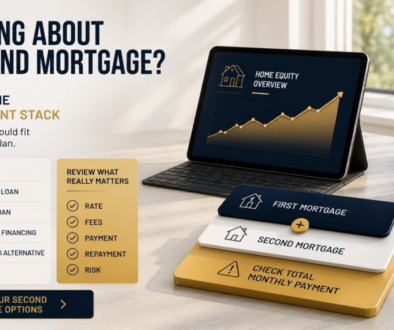
For a Corona home purchase, one mortgage does not always have to provide all borrowed funds. Some buyers consider a simultaneous second mortgage, also called a piggyback loan, in which a first mortgage and a second lien close as part of the same purchase.
The Consumer Financial Protection Bureau defines a piggyback second mortgage as a home equity loan or HELOC made at the same time as the main mortgage. One reason buyers consider it is to reduce the first mortgage’s loan-to-value ratio and potentially avoid private mortgage insurance.
Avoiding PMI does not automatically mean saving money. A simultaneous second introduces another loan, payment, interest rate, set of terms and possible fees. Corona buyers should compare the combined structure with a single conventional, FHA, VA, jumbo or assistance-compatible loan before deciding.
How a simultaneous second works
A purchase may be divided among:
- Buyer down payment
- First mortgage
- Second mortgage or HELOC
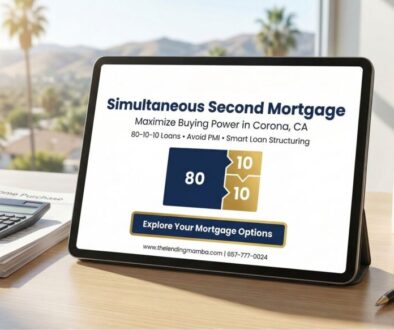
An often-discussed example is an 80-10-10 structure:
- 80% first mortgage
- 10% simultaneous second
- 10% buyer down payment
This is only an illustration. Actual percentages, maximum combined loan-to-value, lien type, pricing and eligibility depend on lender and program guidelines. Other structures may be available or more suitable.
Why Corona buyers consider a piggyback loan
Corona is part of Riverside County, but local property prices, taxes, insurance, HOA dues and special assessments can produce very different monthly-payment results from one home to another. A simultaneous second may be considered when a buyer wants to:
- Reduce the first mortgage’s loan-to-value ratio
- Compare a structure without monthly PMI
- Manage the size of the first mortgage
- Preserve part of the buyer’s liquid reserves
- Create a flexible HELOC component, if available
- Build a financing plan around a higher-priced property
The structure still must qualify as a whole. The second loan is not hidden from the first lender.
Federal ability-to-repay treatment
Federal mortgage rules define a simultaneous loan as another covered transaction or HELOC secured by the same dwelling and made to the same consumer at or before the main mortgage closes. CFPB interpretations explain that the creditor must consider the payment obligation for a known simultaneous loan when evaluating repayment ability for the covered transaction.
In plain language: the second mortgage creates real debt, and its payment must be part of the qualification analysis.
Closed-end second mortgage versus HELOC
The simultaneous second may be structured as a closed-end home equity loan or a HELOC, depending on availability.
Closed-end second mortgage
- Defined loan amount
- Set repayment term
- Commonly fixed payment when the rate is fixed
- No revolving re-borrowing after principal is repaid
HELOC used as a piggyback
- Revolving credit line under the agreement
- Commonly variable rate
- Payment may change with balance, rate and loan phase
- Draw and repayment rules apply
A buyer should not select a HELOC only because the initial payment appears lower. Review the margin, index, rate cap, draw period and repayment-period payment.
Piggyback versus one conventional loan with PMI
| Question | Piggyback structure | Single conventional loan with PMI |
| Number of loans | Two | One |
| Monthly obligations | First plus second | First plus PMI, if required |
| Rate risk | Second may be variable | First may be fixed or adjustable; PMI rules vary |
| Closing and servicing | Two sets of loan terms | One primary mortgage |
| Future refinance | Both liens must be addressed | One mortgage, subject to PMI and refinance rules |
| Potential benefit | May reduce first-lien LTV and avoid PMI | Simpler structure; PMI may later be cancellable under applicable rules |
| Main caution | Second-loan rate, fees and repayment risk | PMI cost and cancellation requirements |
The comparison should use the same purchase price, down payment and expected holding period.
Piggyback versus FHA financing
FHA financing uses its own mortgage-insurance structure and eligibility requirements. A buyer with a smaller down payment or different credit profile may find FHA useful, while another may prefer a conventional or piggyback structure.
Compare:
- Total cash to close
- Upfront and monthly mortgage insurance
- First- and second-loan payments
- Rate and APR
- Property standards
- Future refinance or insurance-removal strategy
- Reserves after closing
The smallest down payment is not always the lowest-cost choice.
Piggyback versus jumbo mortgage
A simultaneous second may sometimes be evaluated when a buyer is near a first-mortgage loan-limit boundary or is comparing jumbo alternatives. But the second loan’s rate, payment and underwriting may outweigh any benefit.
Do not assume an 80% first mortgage automatically receives conforming treatment. Loan-limit, property, occupancy, underwriting and transaction rules determine eligibility.
Costs to compare
Calculate the complete structure:
First mortgage
- Interest rate and APR
- Points and origination charges
- Mortgage insurance, if any
- Lender credits
- Escrow and prepaid items
- Rate-lock terms
Second mortgage
- Rate, index and margin
- APR when applicable
- Origination and third-party fees
- Annual or early-closure fees for a HELOC
- Fixed or variable payment
- Interest-only period, if any
- Balloon or maturity terms
- Prepayment conditions
Property and cash position
- Property taxes
- Supplemental property-tax planning
- Homeowners insurance
- HOA dues and assessments
- Cash remaining after closing
- Emergency and repair reserves
The combined monthly payment should include both loans plus taxes, insurance, HOA dues and any other required housing obligations.
A simple comparison method
Request side-by-side written illustrations for:
- One conventional mortgage with applicable PMI
- First mortgage plus closed-end second
- First mortgage plus HELOC
- FHA or other eligible government option
- Jumbo financing, when applicable
For each, compare:
- Cash to close
- Initial full monthly housing payment
- Payment after any introductory or interest-only period
- Five-year or expected-holding-period cost
- Total points and fees
- Remaining loan balances over time
- Refinance and early-payoff flexibility
Corona-specific planning items
Property taxes and supplemental bills
California buyers may receive supplemental property-tax bills after a change in ownership. Mortgage impounds do not necessarily collect or pay every supplemental bill. Include realistic taxes in the affordability review.
Insurance
Obtain a property-specific quote early. Coverage availability and premium can affect qualification and the combined payment.
HOA and special assessments
Many Corona-area homes have association dues, Mello-Roos or other property-specific costs. Verify the actual obligation rather than relying on a listing estimate.
Local assistance boundaries
Do not assume a Riverside County assistance program applies to an address inside Corona. Current program boundaries should be checked at the exact property level. A simultaneous second used for financing is also different from a government or nonprofit assistance lien.
Common simultaneous-second mistakes
- Focusing only on avoiding PMI
- Comparing the first-mortgage rate but ignoring the second
- Assuming the HELOC rate will remain unchanged
- Forgetting the repayment-period payment
- Spending all available savings at closing
- Ignoring two-loan refinance or payoff logistics
- Not checking a balloon or prepayment term
- Treating a second mortgage as down-payment savings rather than additional debt
- Assuming every program allows the structure
- Failing to disclose the source of down payment
The Lending Mamba 1-0 Buydown option
Eligible Corona buyers may ask whether the first mortgage in their purchase can use The Lending Mamba’s temporary buydown offer and whether it is compatible with the proposed second-lien structure.
The Lending Mamba is covering the cost of your 1-0 Buydown.
Compatibility with a simultaneous second is program-specific and must be confirmed before relying on the combination.
Available on agency or government loans only. Additional terms and qualification requirements may apply.
How The Lending Mamba helps Corona buyers
The Lending Mamba can compare a single mortgage, conventional financing with PMI, FHA, jumbo and available simultaneous-second structures. The review can show the combined payment, cash to close, first- and second-loan costs, rate risk, property expenses and post-closing reserves.
Call 657-777-0024 or 844-24-MAMBA, or visit www.thelendingmamba.com to request a Corona purchase-mortgage comparison.
Frequently asked questions
Is an 80-10-10 loan always available?
No. The structure, percentages, credit requirements, property rules and combined loan-to-value limits vary.
Does an 80-10-10 eliminate mortgage insurance?
It may reduce the first-mortgage LTV enough to avoid PMI on that first loan, but the second mortgage has its own cost. Compare the entire structure.
Q1. Is a simultaneous second the same as down-payment assistance?
A. No. A piggyback second is a financing structure. Assistance programs can have different eligibility, repayment, deferment or shared-appreciation terms.
Q2. Can the second mortgage have a variable rate?
A. Yes, especially when it is a HELOC. Review the index, margin, caps and later payment.
Q3. Can I refinance the first mortgage later?
A. Possibly, but the second lien may need to be paid off, subordinated or otherwise addressed. Future approval is not guaranteed.
Q4. Is a simultaneous second only for first-time buyers?
A. No. Eligibility depends on the program, not simply first-time-buyer status.
Final takeaway
A simultaneous second mortgage can be a legitimate Corona purchase strategy, but it is not free down payment and it is not automatically cheaper than PMI. Compare two loans as one plan: total payment, total costs, rate risk, reserves and future flexibility.