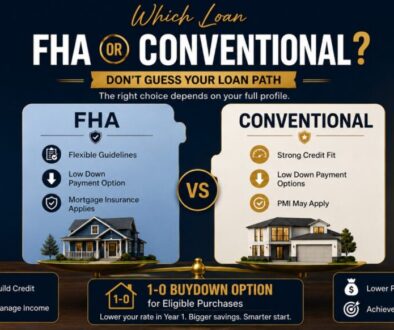

The Lending Mamba 1-0 Buydown Offer: What California Buyers Should Know
A 1-0 Buydown can make the first year of a California home purchase easier to manage, but it is not a permanently lower mortgage rate. It is a temporary payment subsidy attached to a loan with permanent note terms. During the first 12 months, the scheduled principal-and-interest payment is calculated as though the rate were one percentage point below the note rate. Beginning with month 13, the borrower makes the full payment required by the note.
The Lending Mamba may cover the cost of a 1-0 Buydown on eligible California purchase transactions. That possibility can be valuable, especially when a buyer is balancing moving costs, initial home expenses and the need to preserve cash reserves. It still needs to be evaluated alongside the permanent note rate, annual percentage rate, lender costs, seller credits, mortgage insurance, property taxes, homeowners insurance and the buyer’s long-term budget.
This guide explains exactly what a 1-0 Buydown changes, what it does not change, how the subsidy is funded and which questions California buyers should answer before accepting the offer.
Quick answer: A 1-0 Buydown temporarily reduces the scheduled principal-and-interest payment for the first year. It does not change the permanent note rate or eliminate the borrower’s responsibility for the full note payment. The Lending Mamba may fund the buydown cost on eligible agency or government purchase loans, subject to borrower, property, program, transaction, investor and lender requirements. Availability and terms may change.
How a 1-0 Buydown works
The name describes the payment schedule:
| Period | Payment calculation | What remains in effect |
| First 12 months | Principal and interest are calculated using a rate one percentage point below the permanent note rate | The signed note, original loan amount and permanent loan terms |
| Month 13 onward | Principal and interest are calculated at the full permanent note rate | The same note and remaining loan term |
| Every year | Taxes, homeowners insurance, mortgage insurance, HOA dues and assessments are separate from the buydown | These costs may change independently |
The temporary reduction is funded in advance. The subsidy covers the difference between the reduced first-year principal-and-interest amount and the payment required by the note. The loan itself is not rewritten after year one, and the principal balance is not reduced by the buydown account.
For conventional loans delivered to Fannie Mae, the buydown must be documented in a written agreement, the mortgage instruments must show the permanent payment terms, and the buydown cannot change the mortgage note. Fannie Mae also requires the lender to qualify the borrower using the note rate rather than the temporarily reduced rate. These rules help separate a temporary payment arrangement from the permanent obligation.
What The Lending Mamba offer may cover
On an eligible purchase transaction, The Lending Mamba may provide the funds required to establish the 1-0 Buydown account. This is not cash handed to the buyer, a rebate after closing or a change to the sales price. The funds are handled under the written buydown agreement and applied to the scheduled payments during the buydown period.
Eligibility is not automatic. The offer is available only on eligible agency or government loans and depends on the complete transaction. Factors may include:
Loan program and product
Purchase rather than refinance purpose
Property occupancy and type
Borrower qualification
Permanent note rate and loan terms
Investor, insurer, guarantor and servicer requirements
Interested-party contribution limits when another party contributes
The final buydown agreement and closing documents
Offer availability when the loan is locked and closed
A mortgage review is necessary before the buyer, seller or real estate agent builds the offer into a contract strategy. An advertisement should never be treated as a commitment to lend or a guarantee that a particular property and borrower will qualify.
Where the buydown money goes
The cost is generally calculated as the total difference between the reduced first-year principal-and-interest payments and the payments required by the note during the same period. The money is deposited into an account established for the buydown and applied as each payment comes due.
Under Fannie Mae’s current conventional-loan rules, temporary buydown accounts must be fully funded and kept in a custodial account. The borrower remains obligated to make the payment required by the note if the buydown funds are unavailable. The written agreement may also specify what happens to unused funds if the mortgage is paid off early.
This structure is why a buyer should review the agreement itself. The buyer should know who is providing the funds, how the monthly subsidy is administered, whether the servicing transfer affects anything operationally and how unused money will be handled after a sale or refinance.
The first-year payment is not the qualifying payment
The most important budgeting rule is simple: plan for the permanent payment from the beginning.
For Fannie Mae temporary buydowns, the lender qualifies the borrower using the note rate without giving qualifying credit for the bought-down rate. Other agency and government programs have their own current requirements, and the file must satisfy the rules that apply to the selected loan.
Even when a buyer qualifies, qualification is not the same as comfort. The household budget should be tested against:
Principal and interest at the full note rate
Property taxes, including possible California supplemental assessments
Homeowners insurance and any home loan applicable flood coverage
Mortgage insurance or program fees
HOA dues and special assessments
Utilities, maintenance and repairs
Existing debt and savings goals
The reduced first-year amount can create breathing room. It should not be used to make an otherwise unaffordable permanent payment appear manageable.
What a 1-0 Buydown does not reduce
A temporary buydown normally applies only to the principal-and-interest portion of the scheduled payment. It does not freeze or reduce other housing costs.
Property taxes
California buyers may receive a supplemental property-tax bill after ownership changes. The timing and amount are separate from the mortgage buydown. A buyer should ask escrow and a tax professional how to plan for regular and supplemental tax obligations.
Homeowners insurance
Insurance premiums can change at renewal, and availability and deductibles vary by property and carrier. The first-year buydown does not limit those changes.
Mortgage insurance
Mortgage insurance, when required, is based on the loan program and transaction. It does not disappear because a temporary buydown is used.
HOA dues and assessments
Association dues and special assessments are controlled by the community or association documents. They are not part of the buydown calculation.
Maintenance and utilities
Moving, repairs, furnishings and routine homeownership costs remain the buyer’s responsibility. These are often the exact expenses that make first-year cash-flow planning important.
Comparing a 1-0 Buydown with other choices
A temporary buydown is only one way to structure purchase financing. The best comparison uses the same loan amount, estimated closing date and realistic holding period.
| Option | Duration of benefit | Permanent note rate | Main decision question |
| 1-0 temporary buydown | First 12 months | Does not change because of the buydown | Is first-year payment relief more useful than another use of the available funds |
| Permanent discount points | Potentially lasts for the life of the loan | May reduce the permanent rate | Is the upfront cost justified by the expected break-even period |
| Lender credit | Reduces eligible upfront costs | May be paired with a higher rate than another available option | Is preserving cash now worth the long-term pricing difference |
| Seller credit | Can cover eligible closing costs or a permitted buydown | Depends on how the credit is used | Which use of the negotiated credit provides the strongest overall benefit |
| Price reduction | Reduces the contract price | Does not automatically produce the same payment effect as a rate change | How much does the lower price change cash needed, loan amount and monthly cost |
Ask for side-by-side Loan Estimates when comparing materially different loan structures. The Consumer Financial Protection Bureau recommends reviewing multiple Loan Estimates and comparing the loan terms, projected payments, costs and cash to close. The advertised rate alone is incomplete. The CFPB explains that APR reflects the interest rate plus points, broker fees and certain other charges, although APR still does not answer every cash-flow or break-even question.
The Lending Mamba’s guide to comparing California Loan Estimates offers a more detailed review checklist.
When a 1-0 Buydown may be useful
A buyer may value a 1-0 Buydown when the permanent loan already fits the long-term budget and a lower first-year principal-and-interest payment supports a deliberate transition plan.
Examples may include a buyer who wants to:
Rebuild reserves after the down payment and closing costs
Absorb moving, utility and setup costs over several months
Prepare for the first year of maintenance and repairs
Coordinate the end of a lease with the start of homeownership
Preserve funds for planned improvements after closing
Use a lender-funded benefit instead of paying for a temporary buydown personally
These are planning examples, not promises of savings. The buyer should calculate the exact subsidy, full payment and total loan costs for the actual transaction.
When a different strategy may be better
A temporary buydown may be less useful when:
The full note payment does not fit the household budget
The buyer expects to prioritize permanent payment reduction over first-year cash flow
Another credit produces a better result after comparing total costs
The buyer expects to sell or refinance quickly but has not reviewed the unused-funds terms
The loan, occupancy or property is not eligible
Using the available credit for other permitted closing costs would protect more cash
No option should be selected only because its first-year payment looks attractive. The permanent note rate, APR, total closing costs, cash to close and estimated payment after the buydown period all belong in the decision.
Rules can vary by loan program
Temporary buydown rules are not identical across every mortgage product. Fannie Mae’s current Selling Guide permits eligible fixed-rate loans and certain adjustable-rate mortgages for principal residences and second homes, while investor properties and cash-out refinances are ineligible under that guide. It also limits the annual step-up and requires qualification at the note rate.
Government-insured or guaranteed loans must follow the applicable agency guidance as well as lender, investor and servicer requirements. FHA policies are maintained in HUD Handbook 4000.1. A buyer should have the selected product and current requirements confirmed for the specific transaction instead of assuming that a rule from one program applies to another.
The Lending Mamba offer is limited to eligible agency or government purchase loans. It is not presented as available for every conventional product, non-QM loan, investment property or refinance.
What happens after the first year
Beginning with month 13, the temporary subsidy ends and the borrower makes the principal-and-interest payment required by the permanent note. This is not an adjustable-rate reset caused by the buydown. The note rate was established at closing; the subsidy simply covered part of the scheduled payment during the first 12 months.
The total monthly housing payment may change by more or less than the principal-and-interest difference because taxes, insurance, mortgage insurance, HOA charges and escrow analysis can change independently. Before closing, ask for both the initial payment and the payment after the buydown ends.
What happens after an early sale or refinance
Do not assume unused buydown funds will automatically be paid to the borrower in cash. The outcome depends on the written agreement and applicable program rules.
Fannie Mae’s guide allows the agreement to specify that unused funds may be credited toward the payoff or returned to the borrower or the lender that funded the buydown when the mortgage is paid in full. The exact agreement controls. If a refinance is part of the buyer’s future plan, review the unused-funds language before closing and evaluate refinancing later based on then-current rates, costs, value and qualification. A future refinance is never guaranteed.
A California buyer checklist
Before choosing the offer, ask the mortgage professional to document the answers to these questions:
What is the permanent note rate and full principal-and-interest payment?
What is the reduced first-year principal-and-interest payment?
What is the exact total buydown subsidy?
Who is funding the subsidy?
Is this borrower, property, occupancy and loan program eligible?
How do the buydown and other credits appear on the Loan Estimate and Closing Disclosure?
What are the estimated taxes, insurance, mortgage insurance and HOA charges?
How does this option compare with permanent points, a lender credit or another use of seller funds?
What happens to unused funds after an early payoff, sale or refinance?
Which parts of the offer or loan terms can change before closing?
Keep the answer in the transaction file. A clear comparison is more useful than relying on an advertisement or verbal summary.
Planning in Corona and Anaheim
Buyers in Corona, Anaheim and other California communities face the same core buydown question: does the permanent payment fit after accounting for the property’s complete carrying cost?
Local details still matter. Property taxes can include different assessments, HOA structures vary by neighborhood, insurance depends on the specific property and some assistance programs are limited by address, funding or borrower eligibility. A buydown review should therefore happen after the likely property type, occupancy, loan amount and source of funds are understood.
For broader planning, read The Lending Mamba’s guides to California down-payment choices, first-time buyer mistakes and programs and preparing for a smoother mortgage closing.
Steps to review the offer
Complete a mortgage review. Provide accurate income, asset, credit, occupancy and property information.
Confirm the permanent loan. Review the note rate, loan type, term, principal-and-interest payment and estimated total housing payment.
Verify eligibility. Confirm that the transaction meets current agency or government, investor, lender and offer requirements.
Compare alternatives. Review the 1-0 Buydown against permanent points, lender credits, seller credits and other available structures.
Read the agreement. Understand the funding, monthly application and unused-funds provisions.
Budget for month 13. Build the household plan around the full payment and costs that can change independently.
Frequently asked questions
Q1. Is a 1-0 Buydown a permanently lower interest rate?
A. No. The permanent note rate is established in the loan documents. The buydown temporarily subsidizes part of the scheduled principal-and-interest payment during the first year.
Does the payment increase after 12 months?
The temporary subsidy ends after the first 12 months, so the borrower begins making the full principal-and-interest payment required by the note. Taxes, insurance and other housing costs may also change independently.
Can the lower first-year payment be used to qualify?
For a Fannie Mae loan with a temporary buydown, the lender must qualify the borrower at the note rate without considering the bought-down rate. Requirements for the selected program must be confirmed for the actual loan.
Is The Lending Mamba 1-0 Buydown free?
The Lending Mamba may cover the cost of the temporary buydown on an eligible purchase transaction. Buyers should still review the complete loan pricing, credits, costs, permanent note rate and offer terms. Eligibility and availability are not guaranteed.
Can a seller or builder fund a temporary buydown?
Potentially, subject to the loan program and interested-party contribution limits. The source and use of funds must be documented and permitted for the transaction.
Can the offer be used on a refinance?
The Lending Mamba offer described here is for eligible purchase transactions, not refinances.
Can it be used for an investment property?
Do not assume so. For example, Fannie Mae identifies investor properties as ineligible for temporary buydowns under its current guide. The Lending Mamba offer is limited to eligible agency or government purchase loans and must be verified for the property and occupancy.
Can a 1-0 Buydown be combined with down-payment assistance?
Possibly, but compatibility depends on both programs, the source and amount of contributions, the first-mortgage rules and the assistance provider’s current requirements. Both must be reviewed together before making an offer.
Does a 1-0 Buydown reduce APR?
Not necessarily. APR is a broader cost measure that incorporates the interest rate and certain charges. Compare the actual Loan Estimates and ask how the buydown, credits and fees are reflected.
What happens to unused funds if the loan is paid off early?
The written buydown agreement and applicable program rules determine the outcome. The funds may be applied to the payoff or returned as the agreement permits. Buyers should not assume they will receive a cash refund.
Is the offer guaranteed once I apply?
No. The borrower, property, loan program and transaction must meet current requirements, and the offer must still be available for the completed transaction. Applying does not guarantee approval or the buydown benefit.
Review your California purchase options
A useful 1-0 Buydown discussion starts with the permanent loan, not the promotional first-year payment. The Lending Mamba can help you compare the full note payment, estimated first-year subsidy, cash to close, credits and other available loan structures for an eligible California purchase.
Call 657-777-0024 or 844-24-MAMBA, or visit www.thelendingmamba.com to request a mortgage review.
Important disclosure: The Lending Mamba may cover the cost of a 1-0 Buydown on eligible purchase transactions. Available on eligible agency or government loans only. Borrower, property, loan program and transaction eligibility requirements apply. Terms and availability may change. This is not a commitment to lend, a guarantee of approval or a guarantee of savings. A temporary buydown does not change the permanent note rate. Rates, terms, costs and payments vary by transaction.