Think You Need 20% Down to Buy a Home? California Buyers Should Know Their Options
Many California buyers delay homeownership because they believe one thing:
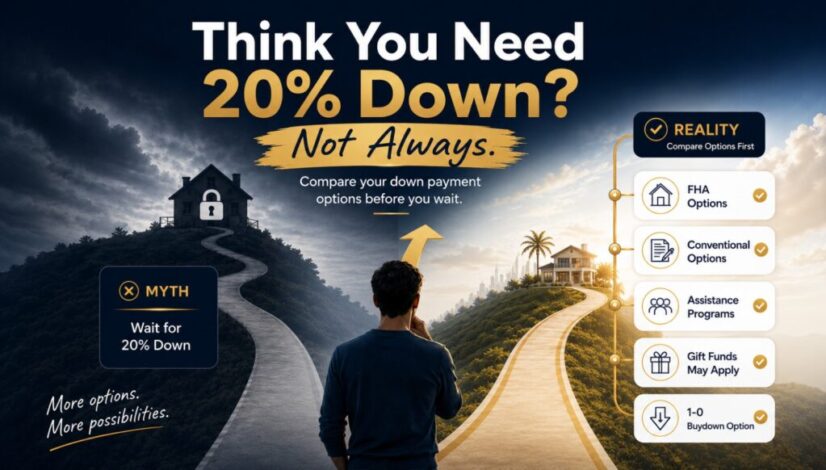
“I need 20% down before I can buy.”A 20% down payment can be helpful. It may lower your monthly payment, reduce the amount borrowed, and may help avoid private mortgage insurance on a conventional loan. But here is the important part:
You may not need 20% down to buy a home.
Many buyers have access to mortgage options that may allow lower down payments, depending on eligibility, credit, income, property type, and loan program rules. At The Lending Mamba, we help buyers compare down payment options before they assume buying is out of reach.
Where the 20% Down Myth Comes From
The 20% number is common because it can be useful in conventional mortgage financing. When a buyer puts down 20%, they may avoid private mortgage insurance, also known as PMI. A larger down payment may also reduce the loan amount and monthly payment.
That is why 20% down is often talked about as the “ideal” down payment. But ideal does not always mean required.
For many first-time buyers, waiting to save 20% can take years. During that time, home prices, rates, rent, and personal circumstances can change. The better question is not “Do I have 20% down?”
The better question is: Which down payment strategy fits my full financial profile?
FHA Loans: A Popular Low Down Payment Option
FHA loans are commonly used by buyers who want flexible qualification guidelines and a lower down payment option. FHA may be worth reviewing if you:
Have limited down payment funds
Are a first-time buyer
Are still building credit
Want flexible qualifying guidelines
Are buying a primary residence
FHA loans may allow eligible buyers to buy with a lower down payment than 20%. However, FHA loans also include mortgage insurance and property requirements, so buyers should compare the full monthly payment before choosing. FHA is not automatically the best option for everyone. It is one option to compare.
Conventional Low Down Payment Options
Some conventional loan options may also allow qualified buyers to purchase with less than 20% down. These programs may be useful for buyers with stronger credit, stable income, and a profile that fits conventional guidelines.
Conventional loans may also offer mortgage insurance options that can differ from FHA mortgage insurance. For some buyers, conventional may be more cost-effective. For others, FHA may be better. This is why side-by-side comparison matters.
What About PMI?
PMI stands for private mortgage insurance. On many conventional loans, PMI may be required when the buyer puts less than 20% down. PMI protects the lender if the borrower stops making payments. It is an added cost, so buyers should understand how it affects the monthly payment. However, PMI does not automatically mean the loan is bad.
Sometimes buying sooner with PMI may make sense. Sometimes waiting, saving more, or using another loan option may make sense. Sometimes a second mortgage strategy or assistance program may be worth reviewing.
Down Payment Assistance Programs
California buyers may also want to review state, county, and local assistance programs.
Depending on eligibility, assistance may help with down payment or closing costs. Options may include CalHFA programs, MyHome Assistance, local city or county programs, grants, deferred-payment loans, or other buyer support. Assistance can be helpful, but buyers should understand the terms.
Some assistance must be repaid. Some may be deferred. Some may have income limits, property limits, homebuyer education requirements, or funding availability rules. Before relying on assistance, ask:
Do I qualify?
Is funding available?
Does the property qualify?
Is the assistance a grant or loan?
When does it need to be repaid?
Can it be combined with my first mortgage?
How does it affect my total payment?
The Lending Mamba 1-0 Buydown Option
Down payment is only one part of affordability. Your first-year monthly payment also matters. The Lending Mamba is covering the cost of your 1-0 Buydown for eligible purchase transactions.
This may help lower your payment in year one, giving you more breathing room as you settle into homeownership. This option should be reviewed alongside your down payment strategy. For example, you may compare:
FHA with lower down payment
Conventional with PMI
CalHFA or assistance options
Gift funds, if allowed
1-0 Buydown strategy
Second mortgage strategy, if applicable
Saving more before buying
Why Waiting for 20% Down Can Be Risky
Waiting to save 20% can be smart for some buyers. But for others, it can delay homeownership longer than necessary. While you wait, several things can change:
Home prices may rise
Mortgage rates may change
Inventory may tighten
Rent may increase
Your dream home may sell
Program availability may change
Personal income or credit may change
When a Bigger Down Payment May Make Sense
A larger down payment may still be a good choice if you want to:
Lower your loan amount
Reduce monthly payment
Avoid or reduce mortgage insurance
Strengthen your offer
Keep long-term costs lower
Improve loan approval strength
But a larger down payment should not leave you with no emergency savings after closing. A buyer who puts every dollar into the down payment may struggle with repairs, moving costs, furniture, or unexpected expenses. Cash reserves matter too.
Questions Buyers Should Ask
Before deciding how much to put down, ask:
What is my minimum required down payment?
What happens if I put 3%, 3.5%, 5%, 10%, or 20% down?
How does PMI affect my payment?
How much cash will I need to close?
Will I have reserves after closing?
Do I qualify for assistance?
Can gift funds be used?
Should I compare FHA and conventional?
Does a 1-0 Buydown help my year-one payment strategy?
What is the best long-term fit?
Common Mistakes to Avoid
Mistake 1: Waiting years because you think 20% down is required.
You may have other options worth reviewing.
Mistake 2: Choosing the lowest down payment without checking the monthly payment.
Low upfront cost can still mean a higher monthly payment.
Mistake 3: Ignoring PMI or mortgage insurance.
Mortgage insurance can affect affordability and should be included in the comparison.
Mistake 4: Using all your savings for the down payment.
You may still need cash for moving, repairs, emergencies, and setup.
Mistake 5: Not comparing assistance programs.
Eligible buyers may have support options, but rules and funding can vary.
How The Lending Mamba Helps
The Lending Mamba helps California buyers compare down payment strategies clearly. We review:
FHA loan options
Conventional loan options
Low down payment programs
CalHFA and assistance possibilities
PMI and mortgage insurance
Closing costs
Cash reserves
1-0 Buydown options
Total monthly payment
Long-term affordability
Final Thoughts
You may not need 20% down to buy a home.
A 20% down payment can be helpful, but it is not the only path. FHA, conventional low down payment options, assistance programs, gift funds, and The Lending Mamba’s 1-0 Buydown offer for eligible purchase transactions may all be worth reviewing.
Before you delay your home search, compare your options.
The Lending Mamba
Call: 657-777-0024
Visit: www.thelendingmamba.com
Disclaimer: Eligibility, rates, terms, program availability, loan options, down payment requirements, mortgage insurance, and payment changes may vary. This content is for educational purposes only and is not a commitment to lend, guarantee of approval, or guarantee of savings. Speak with a licensed mortgage professional to review your specific situation.