FHA vs Conventional Loans in California: Which Mortgage Fits You Best?
Choosing between an FHA loan and a conventional loan is one of the biggest decisions many California buyers face. Both loan types can help buyers purchase a home. Both may offer low down payment options. Both can work for first-time buyers. But they are not the same.
The right mortgage depends on your credit, income, down payment, monthly payment comfort, mortgage insurance, property type, and long-term goals. At The Lending Mamba, we help California buyers compare FHA and conventional loans clearly so they can choose a mortgage strategy that fits their full profile — not just one rate quote.
What Is an FHA Loan?
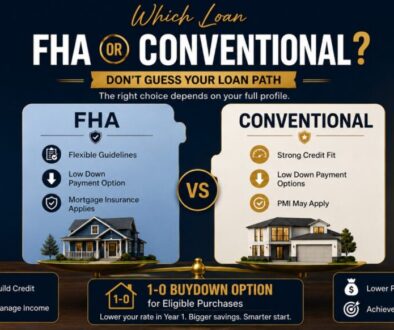
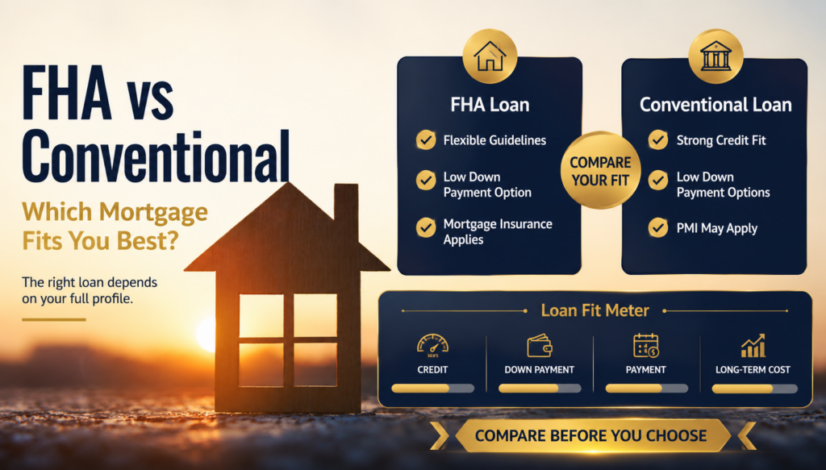
An FHA loan is a government-insured mortgage backed by the Federal Housing Administration. FHA loans are often popular with first-time buyers, buyers with limited down payment funds, and buyers who may need more flexible guidelines. An FHA loan may be worth reviewing if you want:
- Flexible qualifying guidelines
- A low down payment option
- A government-insured loan structure
- A primary-residence mortgage option
- A path designed to support access to homeownership
What Is a Conventional Loan?
A conventional loan is not insured by FHA, VA, or USDA. Conventional loans are offered through private lenders and commonly follow guidelines from Fannie Mae or Freddie Mac. Conventional loans may be a strong fit for buyers with stronger credit, stable income, and enough funds for down payment and closing costs. A conventional loan may be worth reviewing if you want:
- Competitive loan options
- Low down payment possibilities for eligible buyers
- Potential PMI flexibility
- More long-term mortgage insurance planning options
- A structure that may fit stronger credit profiles
FHA vs Conventional: The Main Difference
The biggest difference is how the loans are backed. An FHA loan is insured by the Federal Housing Administration. A conventional loan is not government-insured and is typically based on conventional lending guidelines.
Because of this, FHA and conventional loans can differ in credit flexibility, mortgage insurance, property standards, loan limits, pricing, and long-term cost. That is why buyers should not choose based only on what a friend used, what they saw online, or what sounds easiest. The best choice depends on the buyer’s complete mortgage profile.
Down Payment: Do You Need 20%?
No, not always. One of the biggest buyer myths is that you must have 20% down to buy a home. FHA may offer low down payment options for eligible buyers. Conventional loans may also offer low down payment paths for eligible buyers. But the better question is not only, “How low can my down payment be?” The better question is:
What down payment makes sense for my total payment, cash reserves, mortgage insurance, and long-term plan? A lower down payment may help buyers enter the market sooner, but it can also affect monthly payment, mortgage insurance, and total cost.
Credit Profile: Which Loan May Fit Better?
FHA loans may be attractive for buyers who need more flexible credit guidelines. Conventional loans may be attractive for buyers with stronger credit profiles because pricing and mortgage insurance may be more favorable depending on the borrower’s situation.
This does not mean FHA is only for buyers with weaker credit or conventional is only for buyers with perfect credit. It means credit plays a major role in loan fit. Before choosing, buyers should review:
- Credit score
- Credit history
- Debt-to-income ratio
- Income stability
- Down payment funds
- Cash reserves
- Current debts
- Monthly payment comfort
Mortgage Insurance: FHA MIP vs Conventional PMI
Mortgage insurance is one of the most important differences between FHA and conventional loans. FHA loans usually include mortgage insurance premiums. This can include upfront mortgage insurance and ongoing mortgage insurance depending on the loan structure. Conventional loans may require private mortgage insurance, often called PMI, when the buyer makes a down payment below 20%. The difference matters because mortgage insurance affects the monthly payment and long-term cost.
With conventional loans, PMI may be removable after the borrower reaches certain equity requirements. FHA mortgage insurance rules can be different, and in some cases, refinancing into a conventional loan later may be part of a buyer’s long-term strategy. This is why buyers should compare not only today’s payment, but also what the loan may look like in the future.
Monthly Payment: Do Not Compare Only the Rate
A common mistake is choosing a loan only by looking at the interest rate. The rate matters, but it is not the full mortgage. Buyers should compare:
- Interest rate
- APR
- Mortgage insurance
- Down payment
- Closing costs
- Property taxes
- Homeowners insurance
- HOA dues, if applicable
- Loan term
- Total monthly payment
- Long-term cost
One loan may have a lower rate but higher mortgage insurance. Another may have a slightly higher rate but better long-term cost. The only way to know is to compare the full picture.
FHA Loan: When It May Make Sense
An FHA loan may be worth reviewing if:
- You are a first-time buyer
- You have limited down payment funds
- You need more flexible guidelines
- You want a low down payment option
- Your credit profile is still improving
- You are buying a primary residence
- You want a government-insured mortgage option
Conventional Loan: When It May Make Sense
A conventional loan may be worth reviewing if:
- You have stronger credit
- You have stable income
- You want to compare PMI options
- You may qualify for low down payment conventional programs
- You want more flexibility in long-term mortgage insurance planning
- You are comparing total loan cost carefully
- You want to review multiple conventional mortgage structures
Where the 1-0 Buydown Fits
If your main concern is the first-year payment, ask about The Lending Mamba’s 1-0 Buydown offer. The Lending Mamba is covering the cost of your 1-0 Buydown for eligible purchase transactions. This may help lower your payment in year one, giving you more breathing room as you settle into homeownership.
A 1-0 Buydown does not replace the need to qualify for the mortgage. It is also temporary, so buyers should understand the standard payment after year one. For many buyers, the strongest strategy is comparing FHA, conventional, assistance programs, and buydown options together.
Common Mistakes to Avoid
Avoid these mistakes when choosing between FHA and conventional:
- Choosing based only on interest rate
- Assuming FHA is always cheaper
- Assuming conventional always requires 20% down
- Ignoring mortgage insurance
- Ignoring closing costs
- Not comparing APR
- Not reviewing long-term payment
- Assuming you qualify without a full review
- Not checking assistance programs
- Not asking how a 1-0 Buydown may fit
Questions to Ask Before Choosing
Before you decide between FHA and conventional, ask:
Q. Which loan gives me the best total payment?
Q. How much mortgage insurance applies?
Q. Can PMI be removed later?
Q. How much cash do I need to close?
Q. What happens if I increase my down payment?
Q. Which loan is stronger for my credit profile?
Q. Are there property restrictions?
Q. Do I qualify for buyer assistance?
Q. Should I review a 1-0 Buydown?
Q. What is the long-term cost difference?
Final Thoughts
FHA and conventional loans can both help California buyers move toward homeownership. FHA may fit buyers who need flexible guidelines and low down payment options. Conventional may fit buyers with stronger credit, stable income, and a strong long-term cost profile.
The right choice depends on your full mortgage picture. Before you choose, compare your loan fit. The Lending Mamba can help you review FHA, conventional, buyer programs, payment strategy, and 1-0 Buydown options for eligible purchase transactions.
The Lending Mamba
Call: 657-777-0024
Visit: www.thelendingmamba.com
Disclaimer: Eligibility, rates, terms, program availability, loan options, mortgage insurance, and payment changes may vary. This content is for educational purposes only and is not a commitment to lend, guarantee of approval, or guarantee of savings.